What Do You Think the Role of Art Is in Society
Why Is Fine art Important To Society?
Fine art is everywhere; no thing how difficult you try you lot could never not find art. Everything in the public domain has been created past someone for something. The buildings we alive in, piece of work in, learn in, sweat in, store in – they were all created by an architect with an artistic vision. When we go out for entertainment, films, music, theatre, comedy, history, food – information technology's all an art-form created by someone with a passion. Any public space has been carefully designed to be at in one case functional and beautiful. Museums and galleries share incredible artworks created by infamous artists. No matter where y'all look, in that location is art. It's a part of what makes us human being – a course of expression. Why, then, is art still so widely considered to exist 'the easy subject' at school, insignificant to wider society, a waste of time and endeavour?
"Life without the collective resources of our libraries, museums, theatres and galleries, or without the personal expression of literature, music and art, would be static and sterile – no creative arguments about the past, no diverse and stimulating present and no dreams of the time to come."
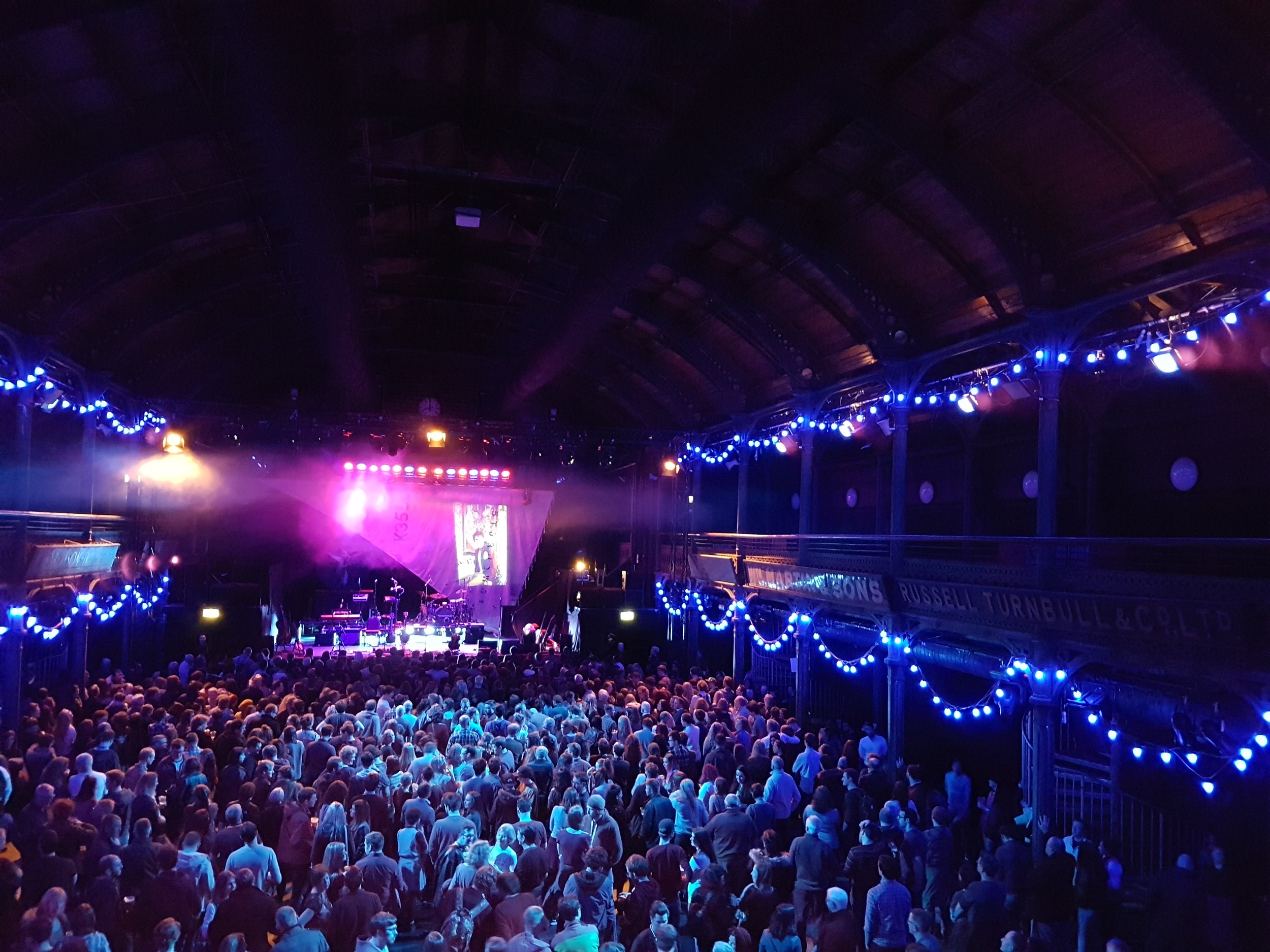
In the Uk in 2011 the art and culture industries created £12.4 billion in aggregate turnover; in 2015 the arts contributed £27 billion to the economy. Equally of November 2017, the artistic industries are worth £92 billion and account for 14.2% of Gross Value Added (GVA) in the Great britain. The arts contribute to our economy by attracting tourists and businesses, developing skills and talents and generating new employment opportunities. According to the Nation Brands Index, the UK is fourth out of l nations for having an enticing cultural feel; the arts attracted 42% of all tourism related revenue generated in the Britain in 2011. These are impressive figures, and, equally we all know, coin makes the globe go circular. Art tin connect culture with bolt in a way that not many other things tin; art generates money but likewise holds significant sentimental and cultural value inside communities. When people nourish a concert, they are paying for music, sure, maybe even hotel rooms, meals, and transport, but they besides gain an incredible experience, a unique atmosphere and a memory that will go through the residual of their lives with them. People don't just want 'stuff' anymore, they want to experience life – the arts are a perfect cross over between culture and commerce.
Some studies institute that people "who had attended a cultural place or issue in the previous 12 months were nearly 60 per cent more than likely to report adept health compared to those who had not." Research suggests that more than engagement with the arts is linked to a "higher level of subjective wellbeing" reported by participants. Besides as that, taking part in the arts has been proven to improve cognitive office of people of all ages and assist to treat a range of illnesses such as dementia, low and Parkinson'due south disease. The Imperial Lodge of Public Health discovered that music and art, when used in hospitals, helps meliorate the conditions of patients by reducing stress, anxiety and blood pressure.
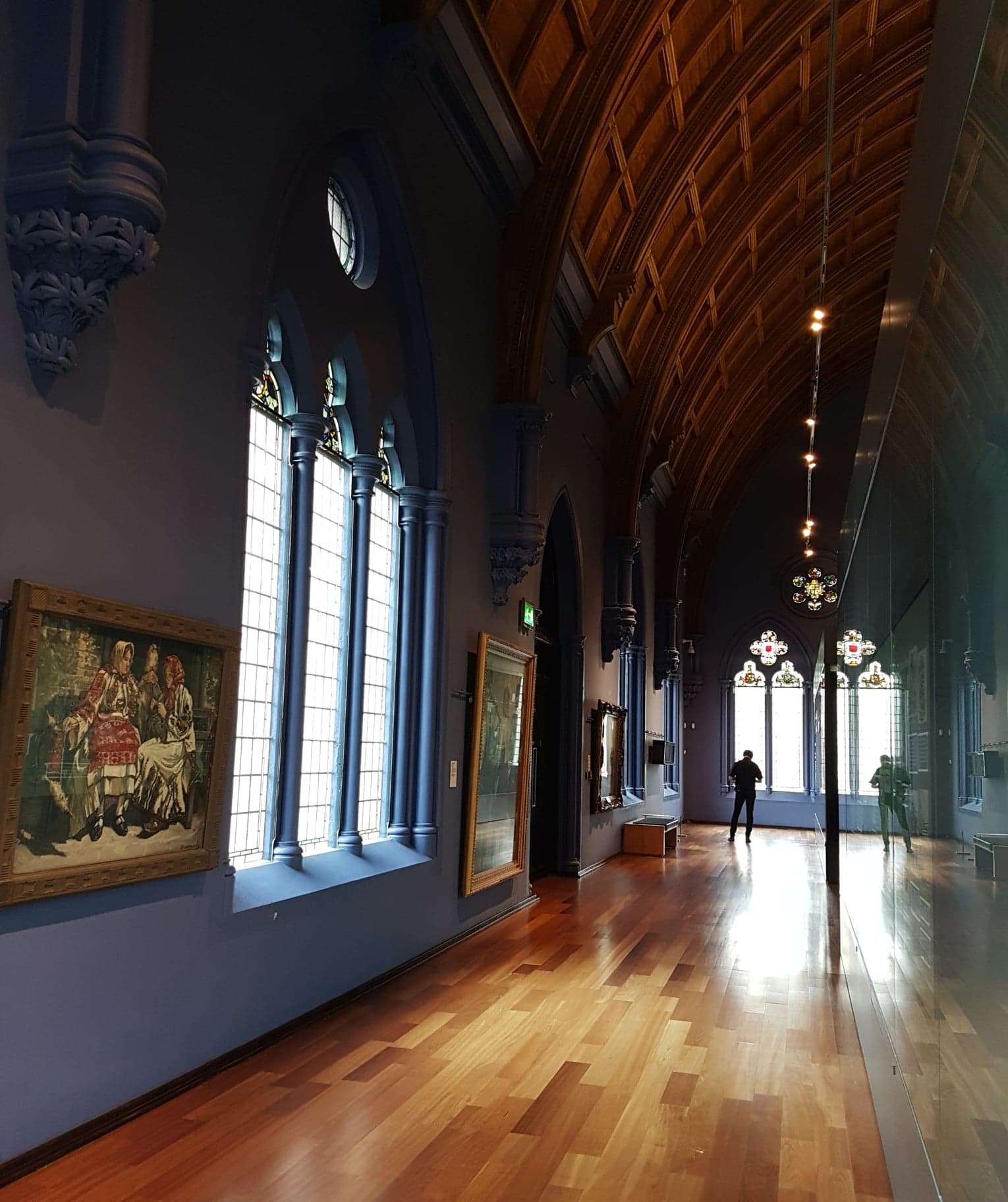
A study by Scottish Government analysts, 'Salubrious Omnipresence: The Impact of Cultural Engagement and Sports Participation on Health and Satisfaction with life in Scotland 2013,' discovered that engaging with the arts has a "positive impact on health and life satisfaction... even when other factors including age, economic status, income, area deprivation, teaching, qualifications, disability or long-standing affliction and smoking are deemed for." Like connections have been made past studies in Sweden, Kingdom of norway and Finland. In addition to this, a written report by Consilium Enquiry and Consultancy in the aforementioned year reported that the arts, in this case dance, can facilitate in social intendance environments by reducing loneliness, anxiety and depression. "Trip the light fantastic has the ability to promote creativity and social integration and allow nonverbal stimulation and communication." In an increasingly aging society, fine art can as well play an important role. One study found that visual arts "facilitated identity formation processes among older people." For older people, engaging with the arts helped to create and maintain a positive sense of self, something which is often lost the older we become. While more long term studies are needed, the arts clearly have a considerably positive impact on physical and psychological wellness.
Inquiry shows that children who are involved with the arts brand greater achievements in their education; those engaged with drama accept greater literary ability and children taking role in musical endeavours exhibit greater skills in maths and languages. Children and students who take role in the arts are "twice as likely to volunteer" and "20 per cent more likely to vote as young adults." Those engaged with the arts have a greater chance of finding and retaining employment, and are more than probable to exist "involved and influential in their local communities." Participating in the arts is essential for kid development; encouraging children to express themselves in constructive means could assistance to course healthy emotional responses in later life.
Furthermore, the arts tin bring communities together; reducing isolation and making people feel safer. Many communities have experienced local regeneration thank you to art projects inspiring people to take pride in their surround and creating community spaces for all to enjoy. The arts have been shown to increase empathy towards others, a side issue of which is reducing social tension and discrimination. Art has been used to convey important societal statements for centuries; from the starting time cave paintings which said 'nosotros are here,' to state of war-time propaganda used to encourage support for the war endeavour, and from purple portraits documenting key historical figures to the feminist Guerilla Girls who highlighted disparities in gender representation.
"These intrinsic effects enrich private lives, only they also have a public spillover component in that they cultivate the kinds of citizens desired in a pluralistic society. These are the social bonds created amid individuals when they share their arts experiences through reflection and discourse, and the expression of mutual values and community identity through artworks commemorating events pregnant to a nation's (or people's) experience."
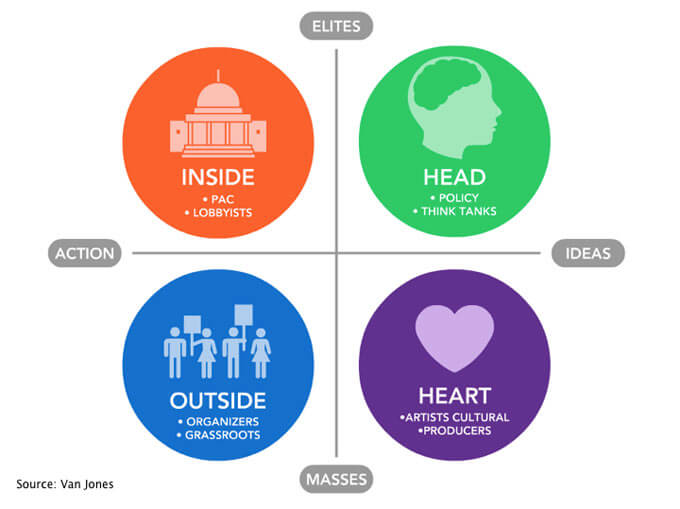
Art strengthens social relationships and identity. A 2012 study found that taking part in the arts improves individual self esteem and awareness and "commonage confidence and connectedness." The evolution of the human encephalon was built on social relationships and for the human population to progress further nosotros have to strengthen our social evolution by using the arts to open up word, empathy and agreement. As Van Jones' graph of how society is constructed explains, artists are in a unique position to convey complex ideas to the masses thereby inspiring action. Art can inspire, raise questions, provoke and empower – just what is needed to enact social change.
The connection betwixt people and art is deeper withal when considered from an anthropological perspective. Art objects such every bit paintings, sculptures, textiles and masks all take symbolic meanings embedded within them and oft play a office in behavior and rituals. For example, Baule ebony sculptures of man figures are blessed by a shaman and become imbued with the power of fertility. Such objects can be considered to have a social agency considering of the link they create between an private perception and a physical manifestation. Equally societies and cultural practices evolve, then practise the meanings placed on art objects. What was once only a painting of a lover, now becomes a meaning snapshot of historic social practices.
Art is so intertwined with culture that it is frequently difficult to separate the two: the erstwhile Mughal Empire in India combined social importance with architecture in the Taj Mahal; Medieval European Christians created spiritual sculptures and images to celebrate their beliefs and religious communities; Japanese culture connects art with everyday activities from gardening to serving tea. As Stephen Sondheim once said, "Fine art, in itself, is an attempt to bring order out of chaos." Art is celebrated and utilised by communities all across the world to entertain, brainwash and embody the cultures art reflects.
For further reading about the benefits of art for children encounter this comprehensive guide by Jenny at Mom Loves All-time.
ericksondientiong.blogspot.com
Source: https://www.ccorinnef.com/blog/2018/8/21/why-is-art-important

Post a Comment for "What Do You Think the Role of Art Is in Society"